
The Poplar
A backyard reckoning

There’s a gigantic poplar in my backyard that stands at the edge of a field, bordering my neighbour’s property. For years, that field belonged to Molly, a white, somewhat neglected pony who grazed there year-round, no matter the weather. Each morning my dog Hadley, then Lulu after her, would slip through a gap in the fence to greet her, while I stood under the tree’s canopy to offer her carrots or an apple. The poplar has witnessed our morning routine, my transition to the County, and my slowing down over the past four years. It’s also witnessed the lives of those long before I became the steward of the ground beneath it.
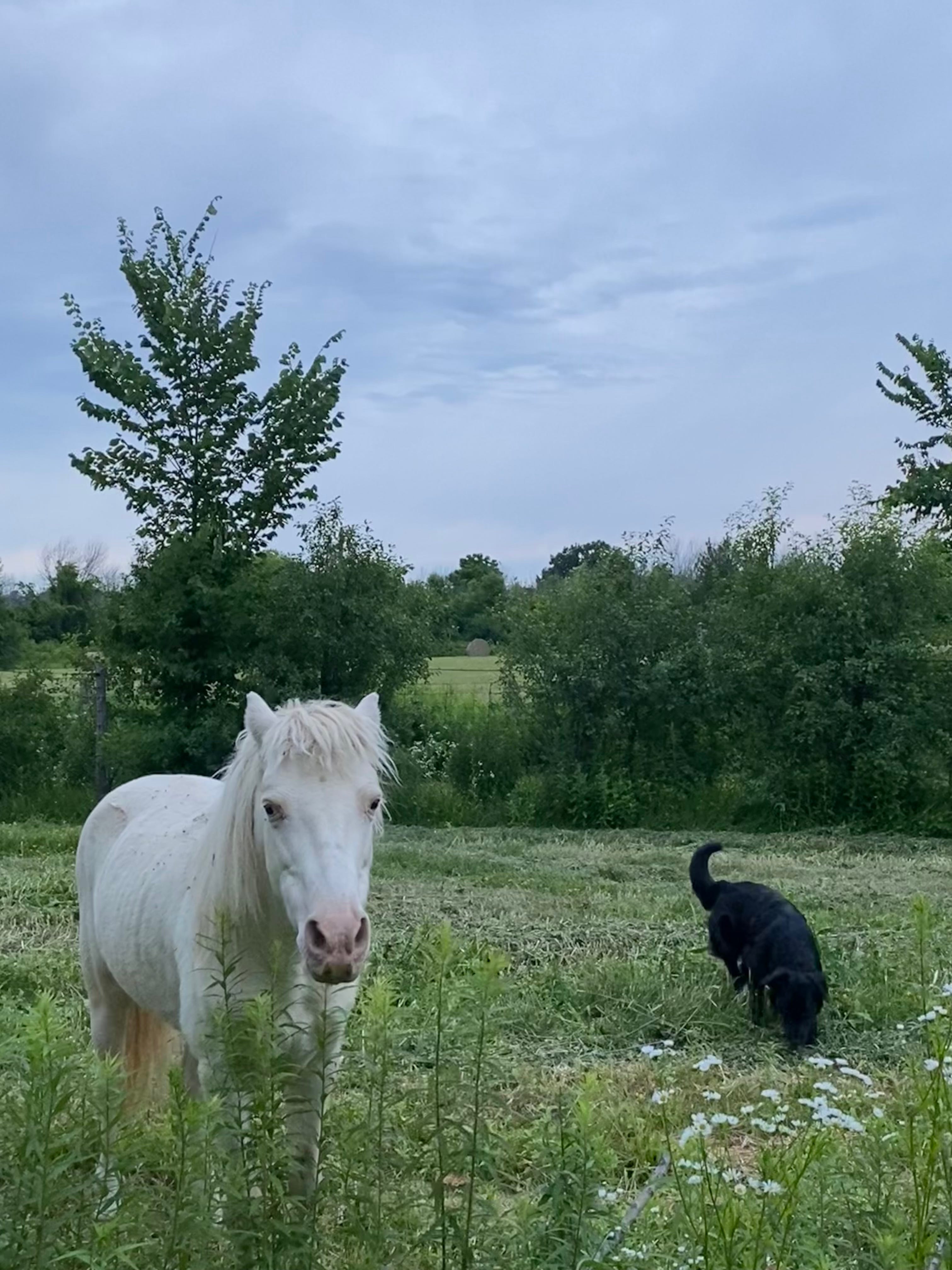
The poplar is home to birds whose songs wake me up in the morning and whose hoots put me to sleep at night. Robins, finches, starlings that descend by the hundreds, even ravens, and the occasional owls and bats, swooping by Lulu and me as we’re out for her late-night pee. The tree’s canopy creates a glorious blanket of shade during the hottest days of summer, providing much-needed reprieve.
A few months after moving in, I had an arborist come by to identify the various trees and evaluate their health. He named each one, cut away dead branches, and pointed to the gigantic poplar with a warning. It’s a water seeker, he said. They grow very fast, and their roots aggressively search for moisture. And this one, he told me, was close enough to my septic system that its roots would eventually infiltrate it. He gave me a quote for what it would cost to take it down and advised me: the closer the canopy grows toward the house, the closer the roots are to your septic.
That was four years ago, and I have not yet cut it down.
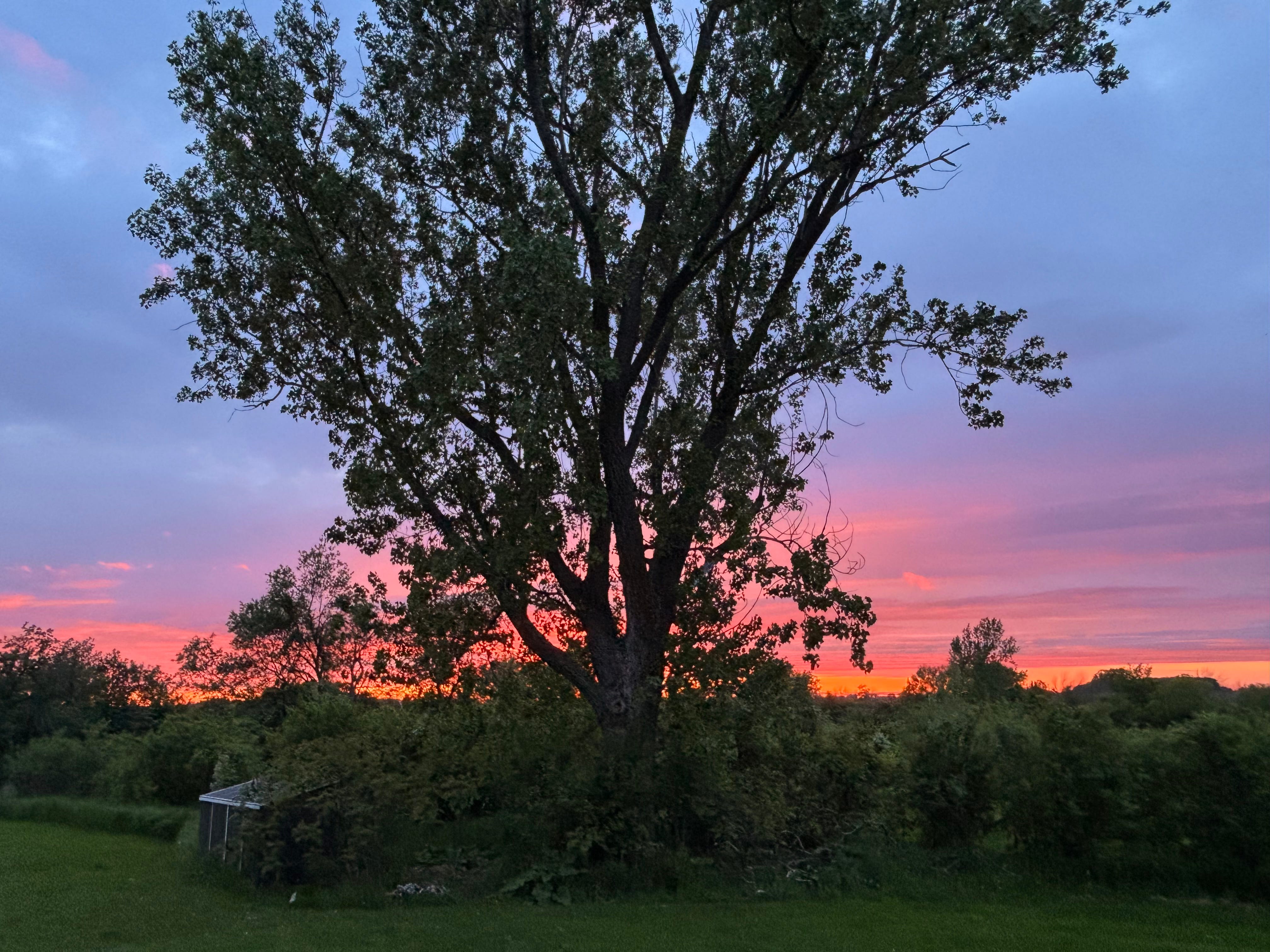
We had a very rainy spring this year, a blessing for the many plants and trees in my yard. They experienced tremendous growth, especially the poplar. Its canopy is creeping dangerously close to my house. And I recently discovered roots, thick as forearms, breaking the surface of my lawn ten or so feet from the septic, exactly as the arborist predicted. I know this means it may have already cost me. The extent of which I won’t know until a plumber evaluates any potential damage. I know that I really need to deal with this and that I’ve likely left it too late.
And yet there’s a resistant part of me that refuses to face the reality of felling this majestic tree.
Living so close to nature, I’ve become acutely aware of the cost of human presence to the many species around us. This winter, I accidentally hit a red-tailed hawk in the middle of the road, devouring roadkill. I braked and swerved as soon as I could, but my car still struck it. My friend Sue offered to drive it to a nearby sanctuary. Despite her best efforts, it sadly didn’t survive. One of the sanctuary’s volunteers explained that dense snow cover was driving birds of prey to seek food on cleared roads, and that many were being hit by oncoming traffic.
A month later, we found an injured barred owl on that same road near Sandbanks. We carefully lifted it into a crate, covered it with a blanket, and I drove it to the same sanctuary, with Lulu in the back, surprisingly calm, as if acutely aware of the situation. I prayed for this beautiful creature to survive the 40 minute drive. Unfortunately, it passed by the time I arrived.
Over the years, I’ve driven by endless raccoons, skunks and rabbits flattened by cars, turtles who didn’t make it across the road in time, and even a dead deer and her fawn. It’s absolutely gut-wrenching.
I’ve begun to understand, with clarity, how responsible we are for these many tragedies. The roads are ours, the traffic is ours, the endless McMansions and subdivisions encroaching on their habitats are ours. Every killed animal I’ve driven by, swerved around or failed to see in time reminds me that this land we call home was never only ours, and creatures will continue to die due to our constant moving, non-stop development, and endless progress.
So, here’s the thing with the poplar in my backyard, and why it’s weighing on me: it’s less about a damaged septic tank versus the health of a tree (though I do take it seriously). Rather, it’s about the cost of my own comfort versus that of an entire habitat: the robins, the hundreds of starlings, the ravens, and the owls that use it; the bats that come off it at dusk; and the shade it creates every summer afternoon. It seems unreasonable to let my convenience outweigh the cost to so many others.
And yet, despite this inner turmoil, I finally left a message for the arborist at my neighbour Scott's insistence. I realize this tree is not a stand-in for every animal I’ve grieved over on the side of a road. It’s a fifty-foot water-seeking poplar that has sadly outgrown its welcome next to my vulnerable septic tank, that has given me four years of birdsong and shade. And that I’ve let stand so I could avoid facing my own privilege as a human who shares this world with other species. Species that regularly die due to our continued participation in a capitalist system that prioritizes profit and perpetual growth above all else.
I don’t know yet what I’ll plant in its place, only that I will.
** Update: the arborist just estimated that the poplar is 85 feet!
Gosh. I know this feeling. At the very least, if/when your poplar is hewn, can you use her for firewood?
We are facing similar challenges as, one by one, we’ve had to remove beautiful, huge redwoods as their roots lift the driveway, crack the retaining wall, and invade the main water line to the house. It’s a sad and painful decision each time.